Featured Article

Featured Article
Hamlet Summary

Architecture

Architecture
Learn About Early Temple Design

Featured Video

Featured Video
Memory of the Camps

Resume

Resume
Current Resume

Pages

TOP 10 APPS FOR THE IPAD

Tuesday, May 4, 2010


By Brian Freeman

After having an iPad for a couple of weeks, I've narrowed down the top 10 apps that all iPad owners must have.

1. Netflix - Allows you to get TV shows and movies instantly anytime on the iPad.

  • Price: Free (however service requires subscription)
  • Category: Entertainment
  • Pros: The ability to watch thousands of tv and movies anywhere.
  • Cons: The service requires a subscription.

2. GoodReader - PDF reader that supports a huge number

  • Price: .99
  • Category: Productivity
  • Pros: Able to read huge PDF files and allows PDF transfer through iTunes which more expensive apps do not allow. Did I mention it's only 99 cents.
  • Cons: Sometimes runs a little slow on large PDF files but nothing really to bad.

3. Pages - App easily converts all word documents to pages so you can word process on the go.

  • Price: $9.99
  • Category: Productivity
  • Pros: Word process on the go and ability to import or export docs via email.
  • Cons: Typing on the IPad is terrible. Pages is really a very stripped down version of Microsoft Word. Also users can not send documents straight to the printer which others allow.

4. School Notes Pro (note: possible name change coming soon to Sundry Notes) - A must have app for any student who owns an iPad. Allows users to draw, record, and research notes. Truly one of the best note taking apps for any device. School Note Pro has so many great features and innovative features.

  • Price: Free
  • Category: Productivity
  • Pros: One of the best note taking apps and with the ability to upload notes to facebook, google, Twitter and Amazon Cloud only sweetens the free deal.
  • Cons: Typing on the IPad is a pain and adjusting text boxes on the fly is tedious but the developer constantly updates so maybe possible changes coming soon.

5. Harbor Master - Okay, this is one of the most addicting games I have ever played. If you bought a iPad I am pretty sure your broke, so this nice free game is just for you. Beware this game is a productivity killer.

  • Price: Free
  • Category: Game
  • Pros: It is pretty much Flight Control HD except without the $4.99 price tag.
  • Cons: Doesn't contain multiple levels or co-op versus mode but it is free and fun so who cares.

6. ABC Player

  • Price: Free
  • Category: Entertainment
  • Pros: The player loads extremely quick and ads only last 30 seconds.
  • Cons: It’s not Hulu and only ABC shows.

7. Text Plus - Go ahead and call your cell phone company and tell them you need to reduce your text messaging plan. This completely free app let's you send text messages to any cell phone for free.

  • Price: Free
  • Category: Social Networking
  • Pros: Absolutely free texting to any cell phone.
  • Cons: The program is ad supported and some cell phones, most notably anyone using AT&T, will have problems sending messages to your iPad.

8. Wikipanion - Wikipedia viewer.

  • Price: Free
  • Category: Reference
  • Pros: Quickest and easiest way to navigate Wikipedia on the Ipad. Also allows you to save articles to read when internet is not available.
  • Cons: All the arguments about Wikipedia not being a reliable source of information.

9. USA Today

  • Price: Free
  • Category: News
  • Pros: Free instant paper no subscriptions required from one of Americas most trusted papers.
  • Cons: The app can be a little buggy however the developers have released two updates just this week in order fix some of the problems.

10. Comic Reader Mobi - This comic book reader can read almost any digital format of comic books available and allows custom viewing options.

  • Price: 14.99
  • Category: Comics
  • Pros: Users can sync comics Quick and easy through iTunes or wifi networks.
  • Cons: Using the app requires the user to customizes viewing options and this takes time and testing. The price is a little high for some users.

**Notable mentions: GodFinger free game kind of like Sims. Dragon Dictation a free talk to text program which will impress your friends. Pandora Radio free app that allows you to stream music from online stations. There a a ton of piano apps on the iPad but Virtuoso Piano HD is a free app and one of best apps that allows you to play the piano on the iPad.

**Worst Apps: Keynote Presentation program has some serious issues that need to be addressed crashes constantly. Flight Control HD $4.99 the price is way to high for this game. IDW Comicbooks great comic book company but the app doesn't compare to Marvel or X-Comics apps.


Knowing We Dream

Sunday, April 25, 2010


I was a little kid I would dream that I had the ability to fly like Superman and my superhero name was "chubby boy". The dream felt so real that when I woke up I thought I would have those abilities.

As I got older, I would dream about how it would feel to get married (I know awwww) or if I would ever get to kiss Topanga from Boy Meets World. For some of my dreams I knew exactly why I dreamed them, as for others, I had no idea why I dreamed of those situations. I knew exactly why I wanted to kiss Topanga or be a superhero. However, I didn't know why I dreamed of getting married or other weird dreams. Some dream of past loves, family members, finding themselves naked in public or being chased by somethig scary.

Where do dreams come from?

Who is to decide what they mean?

One of the most famous theories is Sigmund Freud's psychoanalytic perspective in which dreams stem from unconscious thoughts and desires. Meaning, even though you aren't not thinking about a certain situation it is still weighing in your mind. It is like putting something in back of your mind and forgetting about it. If you are interested in Freud's theories on dreams he is also recognized for his famous book, The Interpretation of Dreams.

I could say Freud is right and there are certain things I do think of unconsciously or try to forget. There are many theories that many psychologists can come up with and make you wonder if they're right. Additionally, there are many websites that have many interpretations on what certain objects or situations in your dream mean.

However, out of all the years that I went to college and being a person that thinks things through, I have come to the realization that, "you know why you dream things." I know now why I dream of certain things even though they don't make sense at first. I know why I dream of getting married and wonder where I would be 10 years down the road even though at first I never had a clue.

So, if you ever wonder why you dream of something or what it means…just think really hard. And if you do think really hard but still have no idea what your dream means, there is always those palm readers.


Sent from my iPad

Sites that Help You Save

Saturday, April 24, 2010


By Brian Freeman of Digitalfactory.tk

Everyone in this day and age buys off the internet. Usually we buy off the internet to save because it's cheaper online, but one way to save even more is the use of promo code or promotion code.

Companies pass out thousands of promo codes every year for number purposes. Most often consumers will get free shipping, a percentage off their purchase or, a favorite among consumers, a free gift with purchase.

How do you get a promo codes?

First, you can join the emailing list to get updates. I, personally, hate spam emails, so my personal favorite sites for promo codes are http://www.retailmenot.com/ andhttp://www.promotioncodes.com/. Both websites have promo codes for everything, including merchant stores, hotels, and even Redboxes.

Retailmenot.com is the better of the two websites, and it has a handy success rate so users can see if the code works.

Next time you buy anything from the Internet, try to find a promo code before checking out because, in this economy, every penny counts.


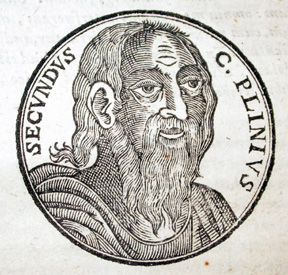
Pliny the Elder

Wednesday, April 21, 2010


By Brian Freeman

Pliny the Elder was a Roman naturalist. He was a fellow soldier and friend of Vespasian. He dedicated his great work and writings to Titus. According to the Columbian Encyclopedia his only surviving work is an encyclopedia of natural science. [1] The Funk and Wagnalls New World Encyclopedia states that Pliny the Elder wrote many scientific works on top of writing many historical works during his lifetime including De Laculatione Equestri, Studiosus, Dubius Sermo, and many others.[2] Pliny the Elder’s best known work is his great encyclopedia the Historia Naturalis which is the only one of his works that has been preserved.[3] E.W. Gudger wrote that Pliny the Elder was one of the most industrious students and one of the most educated men during the time that he lived.[4]

Gaius Plinius Secundus also known as Pliny the Elder was born in A.D. 23. He was born in the town of Como in northern Italy. Little is known about his early life. Jerry Dennis wrote in an article in the Smithsonian that it is likely that his parents were in a high social standing and quite possibly comfortably wealthy.[5] He was first educated in Como, Italy and later in Rome, Italy. According to Jerry Dennis, Pliny the Elder was educated in many different areas such as science, literature, philosophy, art, oratory, and theatre.[6] Dennis also states that Pliny the Elder entered the military at the age of twenty-three and served as an officer in Germany for seven to eight years.[7] He eventually rose in rank to commander of auxiliary cavalry regiment. Dennis goes on to say that after Pliny the Elder’s service in the military he returned to Rome, Italy to study law and pursue a career in writing.[8]

Pliny the Elder’s career is mostly traced back to the letters that his nephew, Pliny the Younger, wrote. Pliny the Younger portrays his uncle as “a man of intense curiosity and ambition, to tireless in his research and so dedicated to a life of letters that he slept only a few hours each day, devoted virtually every waking moment to his work and in the 56 years that he lived, tallied the equivalent of several lifetimes’ worth of accomplishments”.[9] According to Dennis, many wondered how a man like Pliny the Elder was able to compose so many books.[10] Pliny characteristically worked twenty hours out of every twenty-four hour day. John M. Riddle states in The American Journal of Philology that “Pliny was not a renaissance man but a practical, ‘encyclopedic man’ and Roman to the core”.[11]

Pliny the Elder’s best know work is his encyclopedia the Historia Naturalis. This encyclopedia consists of thirty-seven books on nature and art. In his encyclopedia he has 20,000 important facts that were for the Roman Emperor Titus.[12] The Funk and Wagnalls New World Encyclopedia says that first ten books were published in A.D. 77 and the rest were published after Pliny the Elder died.[13] The encyclopedia is concerned with many different areas such as astronomy, anthropology, zoology, botany, medicine and many others. The encyclopedia consists of many medical facts. According to D.E. Eicholz in The Classical Review, Pliny the Elder paid close attention to assure that he used proper medical language.[14] According to Charles G. Nauert, Jr. “Pliny’s Natural History became an influential book of natural science from the moment of its publication. There is evidence for at least some knowledge of it during every medieval century”.[15] Nauert also says that Pliny the Elder’s encyclopedia was never lost but did undergo stages of re-evaluation during the fifteenth and sixteenth centuries.[16] According to John M. Riddle in an untitled article, Pliny the Elder is lacking in some areas in his encyclopedia.[17] These areas include geography, diet, magic, rationality, and art.[18] According to E.H Gudger, Pliny the Elder’s encyclopedia was not printed until 1469.[19]

Much of Pliny the Elder’s work has been studied by reading the letters of his nephew, Pliny the Younger. Most of what is known about Pliny the Elder has been found through these letters that were wrote by Pliny the Younger. John Henderson discusses Pliny the Younger’s letters in an article called Knowing Someone Through Their Books: Pliny on Uncle Pliny.[20] John Henderson also discusses how these books are the main source of information into Pliny the Elder’s life.[21] Henderson says, “Pliny will for us fade eerily and unsatisfactorily away into oblivion, when his letters give out, and we have no story of his end”.[22] Henderson is meaning that if it were not for these letters then there would be no information about Pliny the Elder’s life or how it tragically ended.[23]

Many of Pliny the Elder’s writings have been lost. One of the most interesting writings that Pliny the Elder might have written was a journal entry that describes the eruption of Mount Vesuvius on August 24, 79. Dennis Jerry writes that Pliny the Younger wrote a letter to Tacitus describing in detail how Pliny the Elder spent his last moments before Mount Vesuvius erupted.[24] According to Dennis Jerry, Pliny the Elder was working as though it was a normal day in a villa on the shore of the Bay of Naples. This is where he had been place in command of a navy fleet.[25] Dennis goes on to say that according to Pliny the Younger’s letter, Pliny the Elder climbed to the top of a hill to view the cloud that was appearing over Mount Vesuvius.[26] Pliny wanted to go for a closer look and boarded a boat and went toward the city of Stabiae which was near the base of the volcano.[27] Pliny the Elder and his crew decided to leave Stabiae as the danger started worsening, but the waves prevented them from launching their boats so they had to wait for the wind to end.[28] Pliny the Elder died from sulfurous gases that suddenly swept down on to the beach which probably obstructed his breathing and blocked his windpipe.[29]

Pliny the Elder was a very influential writer. John M. Riddle wrote in The American Historical Review that classicists ignored Pliny the Elder as a writer.[30] He also says that these classicists would judge Pliny the Elder and view him as “a mere credulous compiler”.[31] Riddle also discussed that Renaissance scholars give Pliny the Elder credit for contributing scientific thought to writing.[32] Many scholars will agree with Riddle when he says that Pliny the Elder’s Historia Naturalis is an, “extremely important work for what it reveals about ancient learning as well as its cultural legacy for posterity”.[33] Pliny the Elder was also a very inspiring historian. He inspired other historian such as Tacitus. Ernst Breisach agrees and states that Tacitus’s approach in politics comes from Pliny the Elder.[34]

Pliny the Elder’s works also had a big influence on natural history. E.W. Gudger wrote that “thus for the fourteen hundred years between Pliny’s death and the appearance of his book in print, no other work contributed so much to keep natural history alive; and as we shall see later, for the three hundred years following the appearance of the first printed edition in 1469, it was still the great authority, read, studied, and quoted by all students of natural history”.[35] Gudger goes on to say that this encyclopedia was the foundation for all other books that would be written about natural history.[36]

Pliny the Elder lived a very interesting life and wrote many amazing works. Pliny the Elder was very dedicated to any project he worked on and would work for numerous hours without sleeping. Although he is most famous for his encyclopedia on natural history called Historia Naturalis, he had many other great works that were not preserved. If it was not for this encyclopedia then little would be known about the lifestyles of ancient Romans. This encyclopedia still remains a valuable source of information. Pliny the Elder was a very influential historian who continues to influence historians to this day.


[1] Columbia Encyclopedia, “pliny the elder.”

[2] Funk and Wagnalls New World Encyclopedia, “pliny the elder.”

[3] Ibid 1

[4] E.W. Gudger, “Pliny’s Historia naturalis. The Most Popular Natural History Ever Published,” Isis, no. 3 (1924), in JSTOR, William Carey University; accessed October 23, 2008.

[5] Jerry Dennis, “Pliny’s world: All the facts—and then some,” Smithsonian 26 no. 8, in Academic Search Premier, William Carey University; accessed October 16, 2008.

[6] Ibid 1

[7] Ibid 1

[8] Jerry Dennis, “Pliny’s world: All the facts—and then some,” Smithsonian 26 no. 8, in Academic Search Premier, William Carey University; accessed October 16, 2008.

[9] Ibid 1

[10] Ibid 1

[11] John M. Riddle, “Untitled,” The American Journal of Philogy 116, no. 4 (Winter 1995), in JSTOR, William Carey University; accessed October 16, 2008.

[12] Funk and Wagnalls New World Encyclopedia, “pliny the elder.”

[13] Ibid

[14] D.E. Eichholz, “Review: The Style of the Elder Pliny,” The Classical Review 8, no. 1 (March 1958), in JSTOR, William Carey University; accessed October 15, 2008.

[15] Charles G. Jr. Nauert, “Humanists, Scientists and Pliny: Changing Approaches to a Classical Author,” American Historical Review 84, no. 1 (1979), in JSTOR, William Carey University; accessed October 23, 2008.

[16] Ibid 3

[17] John M. Riddle, “Review: (untitled),” The American Historical Review 93, no. 2 (April 1988), in JSTOR, William Carey University; accessed October 16, 2008.

[18] Ibid 398

[19] E.W. Gudger, “Pliny’s Historia naturalis. The Most Popular Natural History Ever Published,” Isis, no. 3 (1924), in JSTOR, William Carey University; accessed October 23, 2008.

[20] John Henderson, “Knowing Someone through Their Books: Pliny on Uncle Pliny (Epistles3.5),” Classical Philology 97, no. 3 (July 2002), in Academic Search Premier, William Carey University; accessed October 15, 2008.

[21] Ibid 2

[22] John Henderson, “Knowing Someone through Their Books: Pliny on Uncle Pliny (Epistles3.5),” Classical Philology 97, no. 3 (July 2002), in Academic Search Premier, William Carey University; accessed October 15, 2008.

[23] Ibid 2

[24] Jerry Dennis, “Pliny’s world: All the facts—and then some,” Smithsonian 26 no. 8, in Academic Search Premier, William Carey University; accessed October 16, 2008.

[25] Ibid 1

[26] Ibid 1

[27] Ibid 1

[28] Ibid 1

[29] Ibid 1

[30] John M. Riddle, “Review: (untitled),” The American Historical Review 93, no. 2 (April 1988), in JSTOR, William Carey University; accessed October 16, 2008.

[31] Ibid 398

[32] Ibid 398

[33] Ibid 398

[34] Ernst Breisach, Historiography: Ancient, Medieval, and Modern (Chicago: The University of Chicago Press, 1994), 68.

[35] E.W. Gudger, “Pliny’s Historia naturalis. The Most Popular Natural History Ever Published,” Isis, no. 3 (1924), in JSTOR, William Carey University; accessed October 23, 2008.

[36] Ibid 272


2009 ·Digital Factory by TNB